
{ about me }
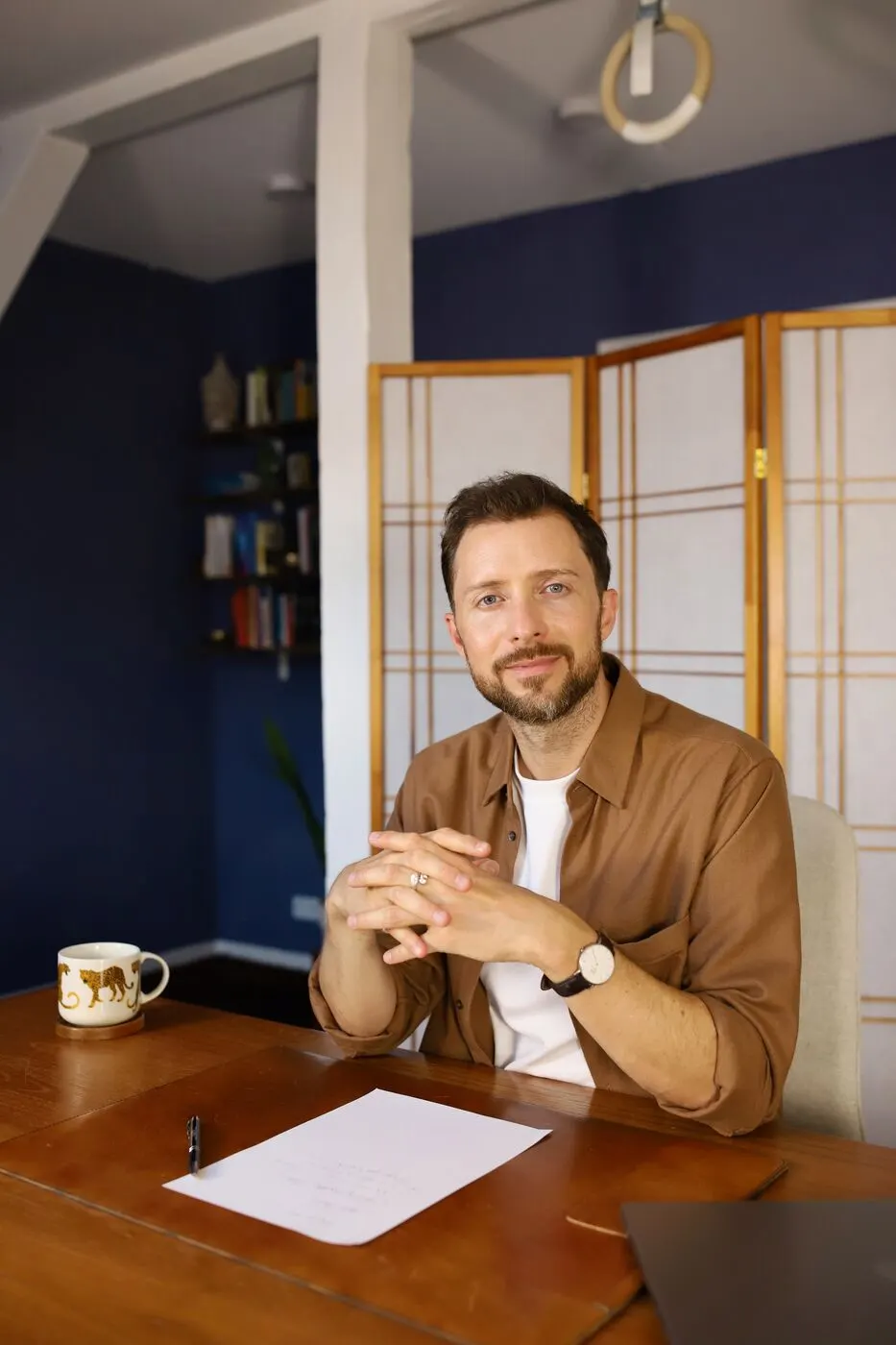
Simon Karim (full name Simon Karim Frembgen) – coach and Heilpraktiker for Psychotherapy (licensed non-medical psychotherapist in Germany), certified NARM® therapist,
in Berlin, Eberswalde and online.

The path of self-realization succeeds to the extent that we relate to others truthfully and authentically.
In relationship with ourselves, with a partner, with family, with friends, with colleagues, with strangers, with nature, with the world.

My path


When I went through burnout after intense years in advertising agencies, I was cut off from myself and from my heart in many areas. I was trapped in pressure, tension, restlessness and unhealthy compensating behaviors. I experienced suffering and pain, and yet I sensed that my heart was beating for something other than the life I had planned back then.
So I began to explore my patterns, strategies and wishes, and set out on the “path of healing”.
In my extensive therapeutic training, I learned and further developed many methods that I pass on today in my psychotherapeutic practice, in my workshops, seminars and coaching – in the spirit of self-love, self-realization and love in relationships, but also in the spirit of stress management and burnout prevention.
My wish is that people find deep trust in themselves and look at the world less through the lens of an old wound and injury; that they can be in contact with their SELF and relate to others from that place; that they don’t burn themselves out or deceive themselves in the first place.
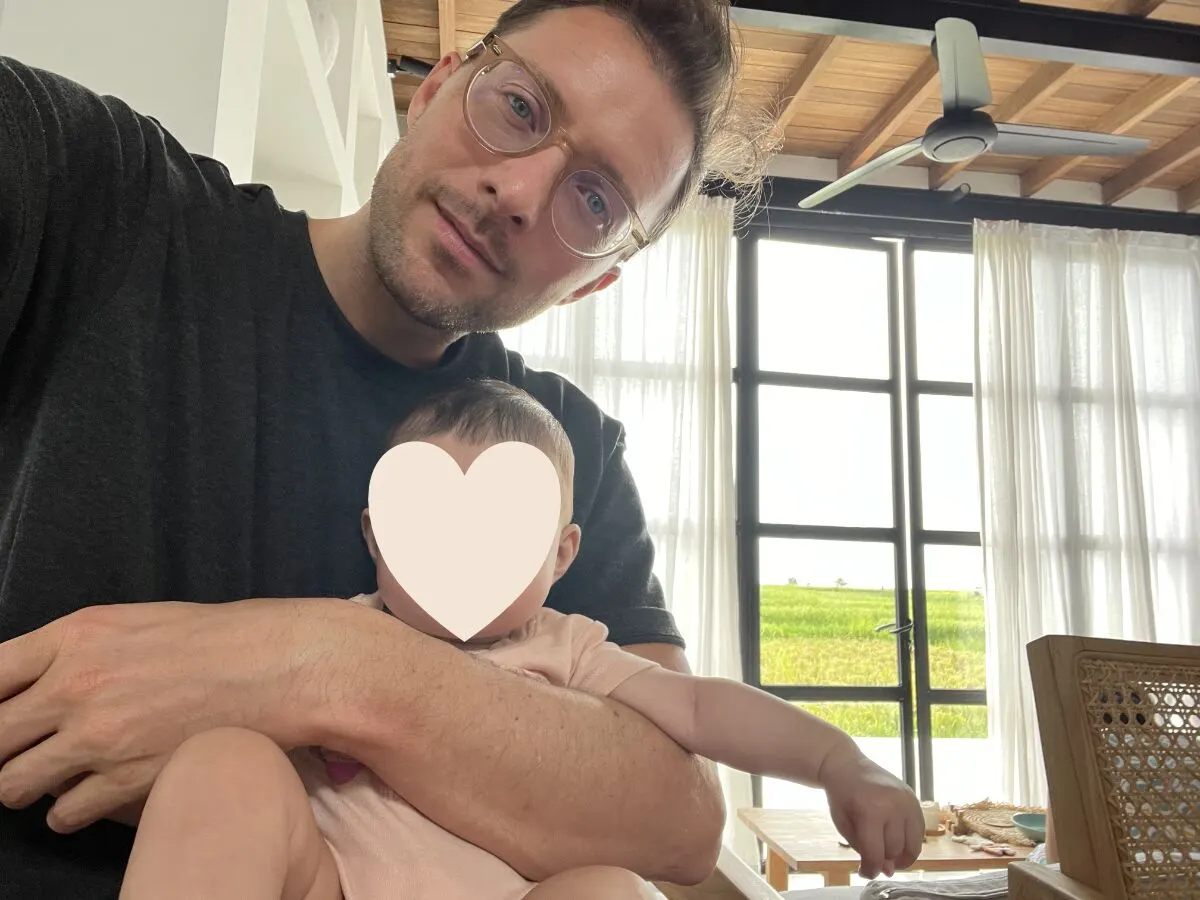
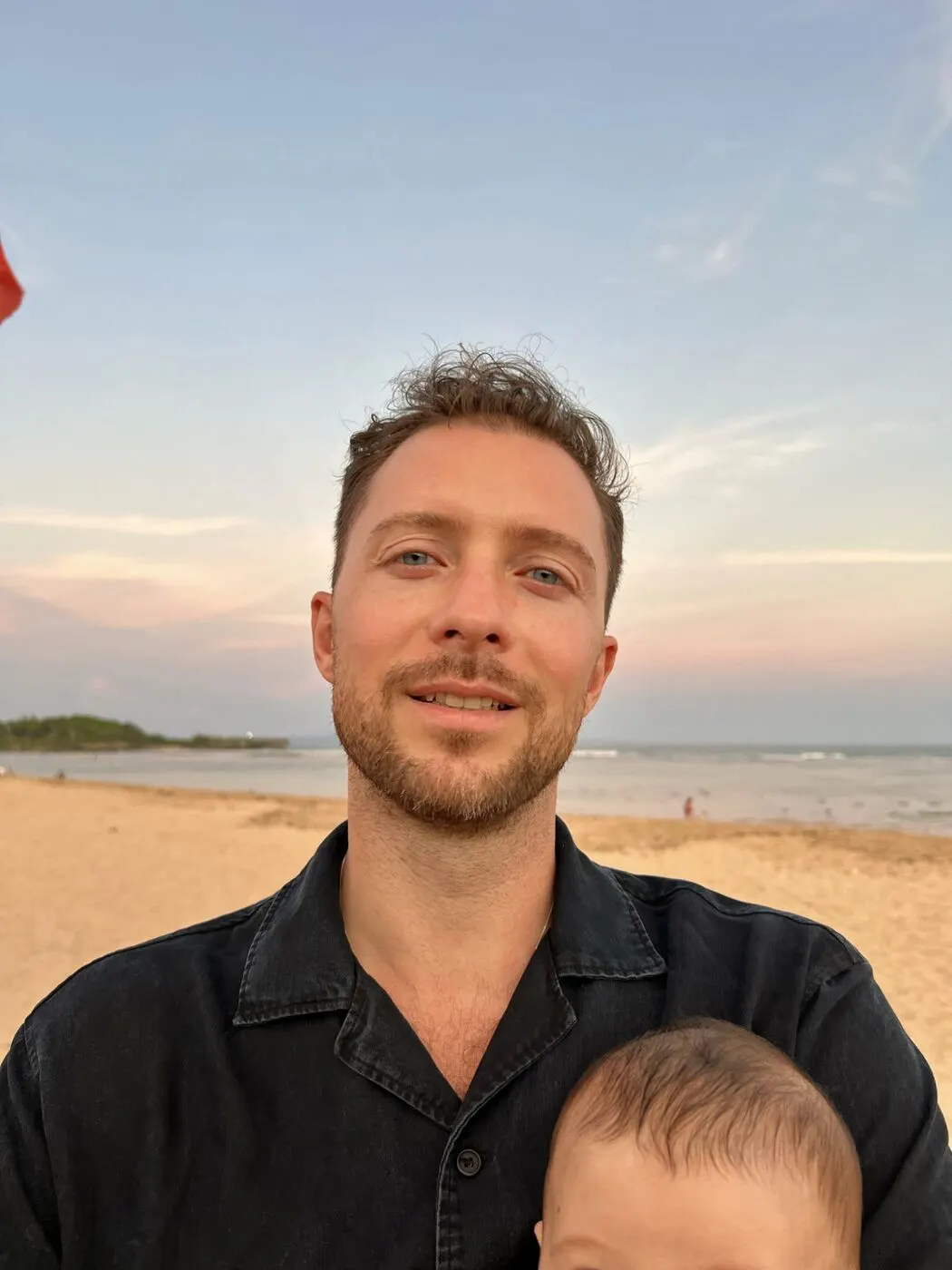
This always requires a new mindfulness on the level of mind and body. In this way we learn to have a new relationship with ourselves, one that gives us clarity and lets us be more alive and authentic – because it is in tune with the heart.
In my one-to-one support, workshops and groups, I offer effective tools that show a new way of leading ourselves. We learn to meet ourselves and others in a new way and to dissolve old patterns that no longer serve us.
“The German word for relationship, Beziehung, doesn’t come from ‘getting’ (beziehen) something from someone, but from the fact that we relate to another human being – in the sense of connection and resonance.”

My path | Detailed version
Even as a little boy, I was fascinated by mindfulness and meditation. As they say, the apple doesn’t fall far from the tree – my mother was already a yoga and meditation teacher back then.
Of course, that didn’t mean I was immune to stress. After several years of frequent 60–70 hour weeks in top 10 agencies, where having a weekend off was a rarity, I was completely burned out. I was exhausted and had panic attacks as well as reflux.
A clear inner voice told me that fighting the symptoms with medication was not my way.
Some people develop symptoms earlier, others later; in the same way, some compensate “more successfully” and others less so, until the mind and/or body pulls the emergency brake.
Of course, it is unsettling and frightening at first to be confronted with burnout symptoms, especially because we are often left alone with them. So no one can be blamed if he or she turns to alcohol, drugs or medication to make the state more bearable, to function and to numb themselves.
It is distress and helplessness that make people do this, and it is closely connected with unmet essential needs from the past. I have seen this in many people in agencies and companies, and years can go by without anything actually changing.
What was missing then, and is still missing, is psychoeducation and an established mindfulness rich in empathy – an inner and outer authority that lives this attitude and models it. That’s why today I reach out to leaders and teams and give seminar series on a new mindfulness. You can find more about my mindfulness, resilience and New Work workshops here: /workshops/
Quite apart from the outer pressure that weighs on many positions, my inner belief “I have to do it well” was, of course, not conducive to relaxation. First and foremost, this perfectionism was meant to protect me, and it was welcomed on the outside. It was more or less the collective mindset in which people spent their everyday lives.
So being stressed was a sign of strength, just as it is now “hip” to work on this stress.
Affirmations, visualizations and good intentions only help in the short term if you don’t tackle the problem at the root. On the one hand, it’s about the work setting and the collective mindset in the team; on the other hand, it’s about our inner parts, the beliefs connected with them and, above all, old strategies and patterns that work in us unconsciously.
We all want to get out of machine mode and toward more relaxation in body and mind.
I spent a long time exploring how I could establish this in a lasting way. I did a lot of
work on myself and learned to listen to my inner voice. Even if at first it was only very quiet.
Too often drowned out by “shoulds” and “musts”, by the monkey mind and inner restlessness.
Today I work with parts such as the inner critic or the perfectionist as a stress expert and coach –
and offer, among other things, “1:1 coaching” and “group work for teams” to employees in companies.
The task is to develop an inner authority, a kind of inner friend who speaks clearly from the wisdom of one’s own heart. It requires being able to let go and to pay loving attention to oneself in the inner process.
Being loving with yourself in times of restlessness is the quality above all. It opens up the space to the true self, as the counterpart to the imagined and conditioned self that is full of identifications and limiting beliefs. Now flow states, connection and aliveness can get more space again – or for the first time. In the end, it is about a radical and loving YES TO YOURSELF. If that speaks to you, perhaps my 8-week support is something for you, 🙂
In this way, a more loving way of treating yourself can emerge, and a peace that also integrates dissatisfaction. In this way, you can experience yourself in the now as more alive, more authentic and clearer.
My work | Key influences
NARM®
The NeuroAffective Relational Model “NARM®” was developed by Dr. Laurence Heller, a long-time teacher of “Somatic Experiencing”. Unlike “Somatic Experiencing”, which focuses on shock trauma, “NARM®” mainly addresses developmental, relational and attachment trauma. Shock trauma refers to rather one-off events that massively overwhelmed the nervous system and could not be processed afterwards.
Developmental trauma arises from phases of life (often in childhood) in which a person had to adapt to an environment that did not allow the expression and development of their own individuality and “truth”.
The existential need for stable contact with caregivers often makes it necessary for a child to put their own needs in the background.
Working with “NARM®” is non-regressive, resource-oriented and relational, in the here and now.
It complements the body-oriented approach of “Somatic Experiencing” with psychodynamic models such as attachment theory and object relations theory. It works simultaneously on the physical and the psychological level of human existence. The aim of NARM® is to improve or restore the connection with oneself, one’s feelings, one’s body and one’s own aliveness. The concept of “developmental trauma” is still relatively new, and we are all affected by it to a greater or lesser extent.
Gestalt therapy
At the center of the Gestalt therapy method is the development and refinement of awareness of the client’s currently present and accessible feelings, sensations and behaviors, which are – quite literally – given a shape (Gestalt). The holistic approach of Gestalt therapy not only consists in seeing the human being as an organism, an inseparable unity of body, mind and soul, but also refers to the wholeness of the organism in its field; that is, the individual can never be seen and understood in isolation from their environment. Gestalt therapy speaks here of the “organism–environment field” as a fundamental category.
RadicalHonesty
It is a philosophy, a lifestyle, a model of emotions and communication. It was developed by the Gestalt therapist Brad Blanton (a student of Fritz Perls). He realized that each of his patients was dealing with lying, pretending, masking or holding back in essential areas of their life.
As soon as his patients learned to honestly share what they felt and wanted in their essential life relationships, he observed, by his own account, that they felt better. Honesty is the key to personal and spiritual growth. Since Radical Honesty® is based on Gestalt therapy, its principles could quickly be integrated into my work. I apply them both in individual work and in group seminars.
Honest sharing & floating
Gopal Norbert Klein is a trauma therapist. He developed “Honest Sharing” and “Floating” – two techniques through which trauma and emotional issues can resolve in a group. Speaking about present emotional experience and my projections are essential mechanisms of this work. In my view, profound change can happen above all in connection. I recommend to each of my clients to practice “Honest Sharing”. This takes place in the so-called “local groups”, which now exist in almost every German city. You can find more information at www.traumaheilung.net/lokale-gruppen.
I myself host regular honest sharing meetings, and they are an enormous resource for me personally.
Resource-oriented psychotherapy
In the cult film “The Blues Brothers”, there’s the line: “We got both kinds of music: country and western.” The view of traditional psychotherapy methods is about that narrow. Even though behavioral therapy is still rightly “state of the art”, it is neither the best nor the newest thing that therapy research has produced.
The “next big thing” in the professional world is integrative or “multimodal” psychotherapy.
Years ago, leading psychologists were already asking: which psychotherapeutic methods and approaches actually work? To find out, they drew on hundreds of studies from all over the world and looked at which methods or aspects of psychotherapy have been shown to help – no matter which school of thought they come from. In doing so, they found so-called “effective factors”, the pillars of effective psychotherapy, a kind of “best of”.
“Best of”: understanding the interplay of body, soul and environment, including between client and therapist, is the essential foundation of resource-oriented psychotherapy. The goal is not only more competence, but also more effective courses of support and more satisfied clients, which is exactly what is needed in a “reality of waiting lists”. Resources are our inner reserves, competencies, abilities and sources of strength. Resources are everything that gives us strength and helps us come into our inner strength: things we can do, that help us, that make us who we are.
Especially in crisis situations, we are not aware of these resources. On the contrary: in everyday life we are mostly confronted with our weaknesses, experience how things go wrong or what we do wrong.
The Enneagram
The Enneagram is a psychological model that describes nine basic personality types. Each type is characterized by certain traits, behaviors, motivations and beliefs. The Enneagram assumes that every person has a main type that shapes their patterns of thinking and acting. These types are arranged in a circle and are related to each other. The model also shows how each type acts under stress or in growth and how the types can behave in different situations.
It is often used as a tool for self-knowledge, personal development and improving interpersonal relationships. By understanding the Enneagram, we can become more aware of our behavioral patterns and learn to accept and understand ourselves and others better.
However, it is important to me to emphasize that the Enneagram is only a model, that people are more complex than just their types, and that there are many facets of personality to take into account.
Human Design
Human Design is a system of self-discovery and self-knowledge based on a combination of various esoteric and scientific disciplines. It was developed in the late 1980s by Alan Robert Krakower, known as Ra Uru Hu. Human Design combines elements of astrology, the I Ching, the Kabbalah, character theory and quantum physics.
The Human Design system assumes that every person has a unique energetic signature determined by the moment of their birth. Based on a person’s date, time and place of birth, an individual body graph is created that shows their personality types, behavioral patterns, strengths, challenges and life purposes. There are the following five main types, which differ significantly in their energy and dynamics: Generator, Manifesting Generator, Manifestor, Projector, Reflector.
You can find out which type you are here: https://www.jovianarchive.com/get_your_chart
The goal of Human Design is to empower people to recognize their true nature, use their unique gifts and live in harmony with their true self. It offers practical tools and strategies for making decisions that are in harmony with one’s own energetic signature.
It is important to note that Human Design is not scientifically proven and is considered more of an esoteric system. Using Human Design is therefore a personal decision that everyone should make individually. Personally, I don’t judge by this system, and at most it can only be an explanatory path in the background. I see every person as unique.
Advaita Vedanta
The strongest influence in this respect was probably my ashram stay in India in my mid-20s. I also followed the teaching of Advaita Vedanta (the teaching of non-duality) in Berlin. The key teacher here was Christian Meyer, who combines Western psychotherapy with spirituality and worked as a psychotherapist for over 20 years. The teachings of Erich Fromm, Carl Gustav Jung, Eckhart Tolle, Eli Jaxon Bear and Jiddu Krishnamurti were also formative.
My grandfather and my mother
Probably my most sacred little book is a small leather-bound volume of old Indian aphorisms by Rabindranath Tagore that my grandfather left to me. He died shortly after I was born and was, it seems, a man who gave people hope in times of war and never lost his faith in humanity. My mother is a meditation and yoga teacher, which inevitably had a considerable influence on me. 😉
∞ That which has always been there and always will be ∞
There has always been a part of me that felt drawn to a deep and peaceful inner stillness. I was already meditating intuitively at the age of 13, without having consciously learned it. Of course, this part was also buried at times, and yet I am naturally drawn back to it again and again.
On a mild summer evening in 2019, as so often before going to bed, I sat at the open window and listened to the silence, outside as well as inside. Only this time I was very present; it was more that something happened than that I did anything. When I then lay down in bed as usual, this time I fell into a … yes, into a sheer infinity, of endless depth and vastness, in which I bathed for about one to two minutes, amazed, peaceful in my heart and grateful at the same time. The exact length of time has slipped away from me; I can only guess at it. There was also the clear knowing that actually, behind things, everything is good and at peace. I had experienced intense inner stillness before, but this was different.
Since then, I have a reference I have truly experienced myself for the fact that we are all actually one and connected with each other. Books and lessons are good signposts and pathfinders, but your own experience, what you live through yourself, is what counts, and that is the real teacher.
In brief | My therapeutic background
- Regular workshop assistance for Benedikt Zeitner (2024–2026)
- Certified NARM® therapist, NARM Training Institute (2024) – Entry in the NARM directory
- Guest author on “Stress & Burnout” in W&V magazine (2023)
- Further training in “resource-oriented psychotherapy”, Arche Medica Berlin (2022)
- Advanced seminar in psychological models & methods, Karen Horney Institut Berlin (2022)
- Ongoing supervision (since 2021)
- Founded my own practice for psychotherapy under the German Heilpraktiker Act and coaching (2021)
- My own seminars & workshops, also for companies and teams (since 2021)
- NARM® Informed Professional, NARM Training Institute (2021)
- Certified coach, Arche Medica Berlin (2021)
- Heilpraktiker for Psychotherapy – license to practice therapy (Heilkunde) under the German Heilpraktiker Act, limited to the field of psychotherapy (2021)
- Further training in NLP, Society of NLP (2021)
- Further training in applied hypnosis, Society of NLP (2021)
- Further training in NVC (Nonviolent Communication) (2020)
- Work as a psychological counselor and coach for companies (since 2019)
- Training in depth psychological and existential psychotherapy / Karen Horney Institut Berlin
– Depth psychology
– Systemic therapy
– Body psychotherapy
– NLP & clinical hypnosis - Started as a coach, psychological and spiritual counselor for individuals and companies
- Work as a graphic designer and senior art director. Before that, studies in “Visual Communication”


Your path
First of all, every path is individual, and I would like to meet you exactly where you are right now. Since you are reading this at this moment, there also seems to be a part of you that is interested in transformation.
We all carry a certain amount of emotional baggage into our relationships and, of course, into our work as well. So we move quite unconsciously in more or less painful loops of repetition that were once a necessary strategy for us. They run all by themselves – like the Energizer Bunny.

A quick question: Can you feel right now how wide or deep your breath goes?
Perhaps you would like to allow yourself to let go of a little surface tension with a few releasing sighs? With short check-ins like this, we can help our body and mind to a small pause again and again.

You may already have listened to podcasts on relationships, mindfulness, meditation, psychology or modern spirituality, you may have meditated before, in a yoga class or on your own, and perhaps you have also had the experience of therapy and regular journaling – but the lasting effect has not come so far, and you keep finding yourself confronted with challenging situations in everyday life and things are not really moving forward?
If you now wish to take on change, and have found the desire for transformation as well as the courage and will to feel your feelings and accept your needs, then I warmly welcome you to your journey toward more lightness, aliveness and connection.
Perhaps one of my forms of support is the right fit for you …
This way to my offerGuiding star
I have a strong wish to live with joy, love, peace, kindness, warmth, enthusiasm, strength, passion, connection and authenticity. These actually natural needs have taken me on a journey on which I was able to heal an enormous range of painful emotions and uncover beliefs.
Wherever and whenever I feel numb, heavy or in pain in my experiences, I explore and process whatever comes up in my body or mind in order to return to inner peace and freedom.
For this, it is essential to accept and feel feelings. This curious openness toward oneself can be a very helpful guiding star. Every time I was able to let go of a painful emotion or an unhealthy belief, I felt lighter and happier.
Inevitably, I gained more inner clarity and experience through this, from which I now help people. Since 2015 I have been working with people in individual sessions and groups, and my own path has always been a resource for this work.




{ my credo }
Heal your past. Shape your here and now. Change your future.
How exactly can I help you?
My work is grounded in depth psychology, and as a certified “NARM® therapist” I have already accompanied hundreds of clients through a personal process.
After how many sessions an improvement appears depends on individual factors, but I observe again and again that positive changes can occur even after just a few sessions.


I designed my group offer especially so that modern coaching methods combine with a trauma-sensitive approach and so that I take you by the hand along this path.
Most of us wish to live with joy, peace, warmth, enthusiasm, strength, passion, connection, authenticity and love. These actually natural needs usually lead to a journey on which one can also heal certain painful emotions and uncover and dissolve beliefs that no longer serve.
Wherever and whenever they feel numb, heavy or in pain in their experiences, we explore and process whatever comes up in body and mind in order to return to inner peace and freedom. For this, it is essential to accept and feel the feelings.
Every time we are able to let go of a painful emotion or an unhealthy identification, we feel lighter and happier. I wish that for you too.


A holistic approach
For me, holistic means that I don’t only look at thoughts and behavior, but at four levels that work together: the body, in which tension and old protective reactions can show up; the nervous system, which helps determine how much safety you can feel right now; the emotions, which want to be felt and understood; and the relationship – to yourself, to other people and also between us in our work together.
That is why I combine talking with body-oriented work and mindful awareness, with methods such as NARM®, Gestalt therapy and hypnosis, always at your pace. You can find out more under my methods.
In a personal, free introductory call you can get to know my way of working with no obligation.
In 15 minutes we look at your situation together. Many people already take helpful and important insights from this conversation.