
and your next step.
Trauma-sensitive coaching is resource- and goal-oriented 1:1 support for adults who feel stuck with self-doubt, boundaries, work questions, relationships or life transitions. Simon Karim, certified coach and Heilpraktiker for Psychotherapy, mindfully includes the body and nervous system – in his practice in Eberswalde, in Berlin or online.

{ coaching in the barnim }
Whether you live in Eberswalde, come from Bernau, Wandlitz or Chorin, or commute to Berlin every day: coaching is about your specific questions – and about approaching them from a place of greater inner safety.
It starts with a free 15-minute introductory call.
15 min in person with Simon • free • no obligation
{ a warm welcome }
Hello, it’s good that you’re here. Perhaps you are at a crossroads right now: a new job, a separation, a move to the countryside, a child – or simply the feeling that you keep getting in your own way.
In trauma-sensitive coaching, we look at what you want to change and at what has been holding you back so far. Without pressure to perform and without the demand to keep optimizing yourself.
I am a certified coach, Heilpraktiker for Psychotherapy and NARM® therapist, and since 2015 I have been supporting people through transitions, by now in over 500 coaching sessions. I have been working in Eberswalde since 2025 – in-person appointments by arrangement, about 5 minutes by bus from the station. In English on request.
{ THE APPROACH }
What makes trauma-sensitive
coaching different
For me, coaching means: we work on a concern that matters to you right now – a decision, a recurring conflict, a boundary you haven’t been able to set so far. We clarify where you want to go and look at what has been holding you back.
Trauma-sensitive means that I keep in mind how your nervous system reacts to pressure, closeness or change. We go at a pace you can hold and build on what already supports you today.
Unlike in therapy, coaching doesn’t focus on working through your history, but on your present and your next step. When old patterns show up – and they often do – we take them seriously without getting lost in them.
Coaching is not a therapeutic treatment and does not replace medical or psychotherapeutic treatment. It is for people who generally cope with everyday life and want to change something specific.
My training flows into the work in the background: the NeuroAffective Relational Model (NARM®) by Dr. Laurence Heller, the client-centered approach of Carl Rogers, Gestalt work and mindfulness.
You don’t need to know any of this. The only important thing is: we don’t work against your protective patterns, but with them. That way, change can arrive not only in your head but also in your body – and therefore in your everyday life.
If you would like to work specifically on developmental and attachment trauma, NARM therapy in Eberswalde is a better fit. For orientation during acute strain, there is psychological counseling in Eberswalde.
You can find out more about me on the About Simon page.
You know what you want –
and yet it doesn’t work?
- You’ve read self-help books, listened to podcasts and written down goals – and still end up back in the old pattern.
- You say yes when you mean no, and are annoyed with yourself afterwards.
- At work you function reliably, but the question of whether this is still your path won’t let go of you.
- Self-doubt shows up exactly when it matters: in a conversation with your boss, in a job application, when addressing a conflict.
- You are facing a change – a separation, a move, becoming a parent, a new job – and feel more pressure than clarity.
- Well-meant tips from the people around you don’t help, because they don’t fit you.
- You don’t want to spend years looking back, but to change something now.

Clarity instead of constant pressure
Many people who come to coaching are capable and reflective. And yet everyday life costs them more energy than it should – because they constantly adapt, meet expectations or avoid conflicts.
Trauma-sensitive coaching looks at exactly these places. Not to fix you – you are not broken – but to understand which strategy protected you in the past and may be getting in your way today.
This leads to concrete steps: a boundary you set more clearly, a conversation you handle differently, a decision that finally feels right.
Who the coaching is for
The coaching is for adults who want to change something specific and notice that willpower alone isn’t enough. Common topics are self-doubt and the inner critic, boundaries and people pleasing, career reorientation and overload, relationship and family issues as well as life transitions such as moving, separation or becoming a parent. If there are deep attachment or developmental issues behind your concern, we discuss openly whether NARM therapy would be a better fit.
{ in the session }
How a coaching session works
It starts with the question: what should be different today? We put your concern as concretely as possible, for example: “I want to say what I think in the team meeting without brooding about it for hours afterwards.”
Then we look at what happens when you imagine this: which thoughts come up, where in your body does it get tight, which old belief speaks up? These signals are not a disturbance but valuable clues to what you need so that the next step becomes doable.
At the end, we gather what you take with you: an insight, a small exercise or a concrete plan until the next session.
Curious? The free introductory call is the first step.
What clients say about the coaching
{ coaching in person }
coaching in person
Coaching in Eberswalde – for the whole Barnim
In the Barnim, distances are often longer than in the city, and specialized services nearby are rarer. The practice in Eberswalde is easy to reach – from Eberswalde itself, from Finowfurt, Chorin or the Schorfheide as well as from Bernau, Biesenthal, Wandlitz, Panketal or Werneuchen.
Many people who live here commute, care for relatives or are building a new life after moving to the countryside. It is exactly these kinds of transitions that often lead people to coaching.
By train and bus
From Berlin, the RE3 or RB24 takes you to Eberswalde station in about 30–40 minutes. From there, it’s about 5 minutes by bus to the practice.
By car
If you come by car, we’ll briefly talk about directions and parking when we arrange the appointment.
Appointments by arrangement
We schedule appointments in Eberswalde individually, fitting in with work, commuting times or childcare as far as possible. In between, you can continue online.
Discreet in a small town
In Eberswalde, people know each other. What you discuss in coaching stays confidential, and you only receive the exact address after the introductory call.
{ SETTING & PROCESS }
coaching in eberswalde
The framework for your coaching
Location: Practice in Eberswalde, about 5 minutes by bus from the station; exact address by arrangement. Also a practice in Berlin and online by video.
Duration: 50 or 90 minutes per session – we decide on the right length together.
Scope: For lasting change, I usually recommend at least 8 sessions; we agree on the framework together in the introductory call.
Fees: Fees are income-based; you will receive an overview in the introductory call.
You don’t need a finished goal –
a question that’s on your mind
is enough to start.
How to begin: In the free introductory call (15 minutes, via Zoom or phone), we clarify what matters to you and whether coaching is the right thing for you right now.
The questionnaire for the introductory call helps me beforehand. You will usually receive a reply within two to three days.
{ body & nervous system }
Why the body has a say in coaching
Perhaps you know this: you firmly resolve to stand up for yourself in the next conversation – and then your mind goes blank, your voice gets quiet, and you agree once again. This is not a lack of discipline. The nervous system often decides faster than the mind whether a situation is safe.
That’s why we include the body in coaching: we pay attention to when tension arises, what calms you and how much change feels good right now. This creates steps that don’t just sound good, but can also be put into practice in everyday life.
A calm counterpart helps with this. Many people find that it becomes easier to try new things when they feel safe in contact.

“Space is the antidote to pressure.”
Why people
come to me for
trauma-sensitive coaching.
Why people
come to me for
trauma-sensitive coaching.
Many of my clients say after a few sessions:
“For the first time, I can breathe freely again and feel more open and positive.”
“I feel my body, I’m more with myself and trust myself much more.”
“I react differently – calmer, clearer, from inner balance.”
The testimonials were written by clients voluntarily and without any compensation, and were selected by me. They reflect personal individual experiences and are not a promise of any particular course or outcome.
{ about simon }
about simon
Your coach:
Simon Karim
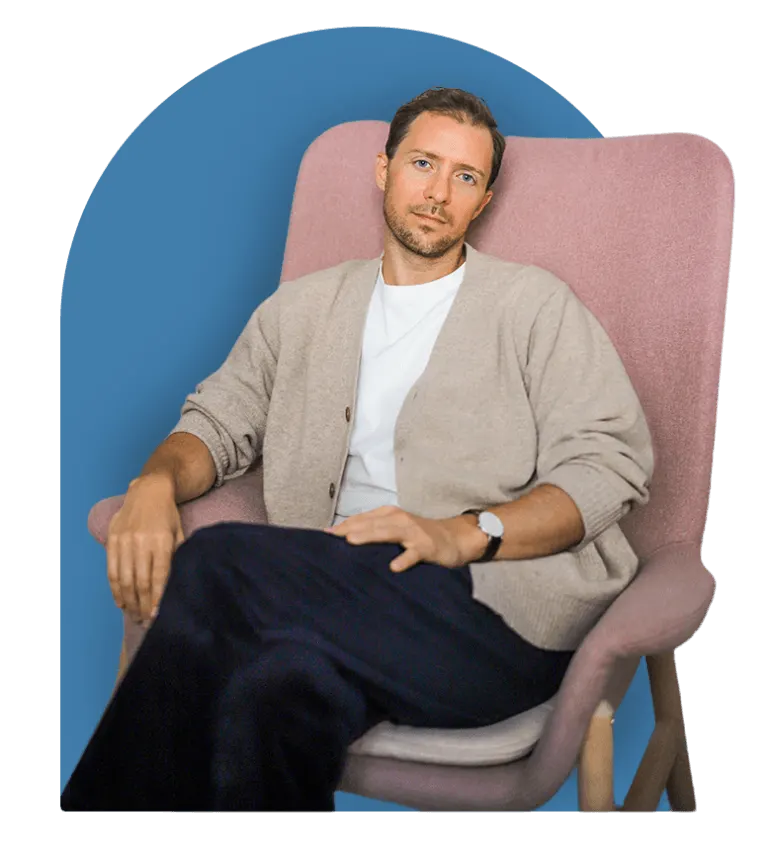
Simon Karim is a certified coach, Heilpraktiker for Psychotherapy and NARM® therapist. Before devoting himself fully to supporting people, he worked for many years as an art director for companies and agencies – so he knows pressure to perform and career transitions from his own experience, too.
Since 2015 he has been supporting individuals and teams, by now in more than 500 coaching sessions – with heart, humor and directness, as an equal. You can find more about his background on the About Simon page.

{ FAQ }
Frequently asked questions about coaching in Eberswalde
What is trauma-sensitive coaching in Eberswalde?
Trauma-sensitive coaching in Eberswalde is 1:1 support in which you work on a specific concern – for example self-doubt, boundaries, a work question or a life transition. What makes it special: we pay attention to how your nervous system reacts and go at a pace that doesn’t overwhelm you. Sessions take place at the practice in Eberswalde or online.
What topics can I bring to coaching?
Anything you want to change in your life and where you can’t move forward on your own. Often these are self-doubt and self-criticism, difficulties with boundaries and saying no, overload and reorientation at work, conflicts in your relationship or family, as well as transitions such as separation, moving or becoming a parent.
How does coaching differ from NARM therapy and psychological counseling?
Coaching is goal- and resource-oriented: we work on a concern in your present. NARM therapy goes deeper and looks at attachment and developmental patterns that formed early on. Psychological counseling is a shorter framework for orientation in crises and before decisions. In the introductory call, we find out what suits you right now.
I commute to Berlin or I’m new to the Barnim – does coaching fit my situation?
Yes, transitions like these are a common reason to come. Long commutes, a new start in the countryside, a job change or the question of how work, family and your own needs fit together can be sorted out well in coaching. We look at what is costing you energy right now and what helps you settle in well.
I live in Bernau, Wandlitz or Chorin – is the journey to Eberswalde worth it?
That’s up to you. Eberswalde is easy to reach by train or car from many places in the Barnim, and from Eberswalde station it’s about 5 minutes by bus. If the journey becomes too much in everyday life, we can hold some or all sessions online by video.
Does coaching stay confidential when people know each other in Eberswalde?
Yes. What you share in coaching stays between us. I only give out the exact address of the practice after the introductory call, and we schedule appointments individually. If you would rather not be seen at all in a small town, you can also do the coaching completely online.
How many coaching sessions make sense?
For lasting change, I usually recommend at least 8 sessions; we agree on the framework together in the introductory call. A session lasts 50 or 90 minutes. At the beginning, a rhythm of one to two weeks is helpful; later, longer intervals are often enough.
What do I take from a session into my everyday life?
Usually something concrete: an insight into your pattern, a small exercise for self-regulation or a plan that you try out until the next session. We then talk about what worked well and where things are still stuck.
What can I do if the fee is hard to manage right now?
Bring it up openly in the introductory call. Fees are income-based; you will receive an overview in the introductory call. You’ll also find many free articles on the nervous system, attachment and self-leadership on the Knowledge page.