
The NeuroAffective Relational Model by Dr. Laurence Heller
NARM (NeuroAffective Relational Model) is a body-oriented approach for working with developmental and attachment trauma. It is aimed at adults whose early relational experiences still affect their self-image, their nervous system and their relationships today, and it works in the here and now rather than in the past. You can experience NARM with me in my practice in Berlin, in Eberswalde or online.
NARM® – The capacity to come into contact
No matter how much we have withdrawn or how deep our wound lies – in all of us there is a deeply rooted longing for contact. Much like a plant growing toward the light, this inner impulse strives to connect with others. NARM was developed by Dr. Laurence Heller, an American who has been teaching in Germany, among other places, for more than 20 years.
The aim of the NeuroAffective Relational Model (NARM®) is to restore the connection to our SELF – to our feelings, our body, our aliveness and to other people. This contact is a fundamental need and at the same time one of the greatest challenges in our lives.

“Connection – Our greatest desire and deepest fear.”
Dr. Laurence Heller | Developer of NARM®
Working with relational and attachment trauma
NARM® is a body-oriented and psychodynamic approach to the treatment of attachment and relational trauma. We work on regulating the nervous system and on the distortions of identity that arose in relationships and attachments in our early years.
Our identity is like a huge puzzle made up of many different pieces. In working with NARM®, we also look at individual sections of this puzzle in order to better understand and integrate the complex connections and distortions.
Internationally, the approach is increasingly used in working with developmental, attachment and relational trauma (complex trauma). The inner wound from back then is the trauma, and the following is important: trauma is what happened on the inside back then, not the situation itself. What one person may get through unharmed can cause deep injuries in another.
It is the deep core in which a wound arose, because relational conflicts touch us exactly there. So the child develops strategies – in NARM terms survival strategies – so as not to have to feel this wound and the pain, and splits off from it.
These strategies are very complex and manifold, which is why in English we also speak of “complex trauma”.
I work with this form of trauma in my practice in Berlin, in Eberswalde and also online.

Want to work on developmental trauma and release attachment patterns?

Working through developmental trauma from the past
NARM® is particularly helpful in processing developmental trauma that arose in early childhood in contact with our caregivers, whether at home, at school, in kindergarten or even before birth in the womb.
The following checklist shows common signs. It doesn’t replace a diagnosis, but it can help you recognize your own patterns. I describe them in more detail in the article Developmental trauma: recognizing and understanding the symptoms.
The NARM checklist – common symptoms of developmental trauma
- Feelings of shame and guilt
- Lack of self-worth
- Negative self-image
- Numbness or feeling dazed, a sense of estrangement (depersonalization).
- Feeling of helplessness, defenselessness, being at the mercy of others
- Feeling of an underlying threat
- Lack of body awareness, tension
- You control your feelings through drugs such as alcohol, cannabis, etc.
- You can’t trust anyone and would rather stay in control.
- You inwardly disconnect from what is happening around you.
- You can’t feel joy, don’t respond to other people’s joy, and lack empathy.
- You have problems in contact with other people. You feel as if you don’t belong anywhere and see yourself as a burden.
- You usually find it hard to put your feelings into words.
- You take risks spontaneously, do things on impulse, and have problems with aggression and impulse control.
- You have trouble setting boundaries and saying a clear no.
- You find many flaws in yourself and react very vulnerably to rejection.
- You know suicidal thoughts, and they keep coming back.

How developmental trauma arises
and how NARM works
Developmental trauma often arises from difficult attachment experiences between parents and child. In the development of their personality, children strongly orient themselves toward their parents’ behavior.
The way parents respond to their children’s needs shapes the children’s self-image and their view of the world.
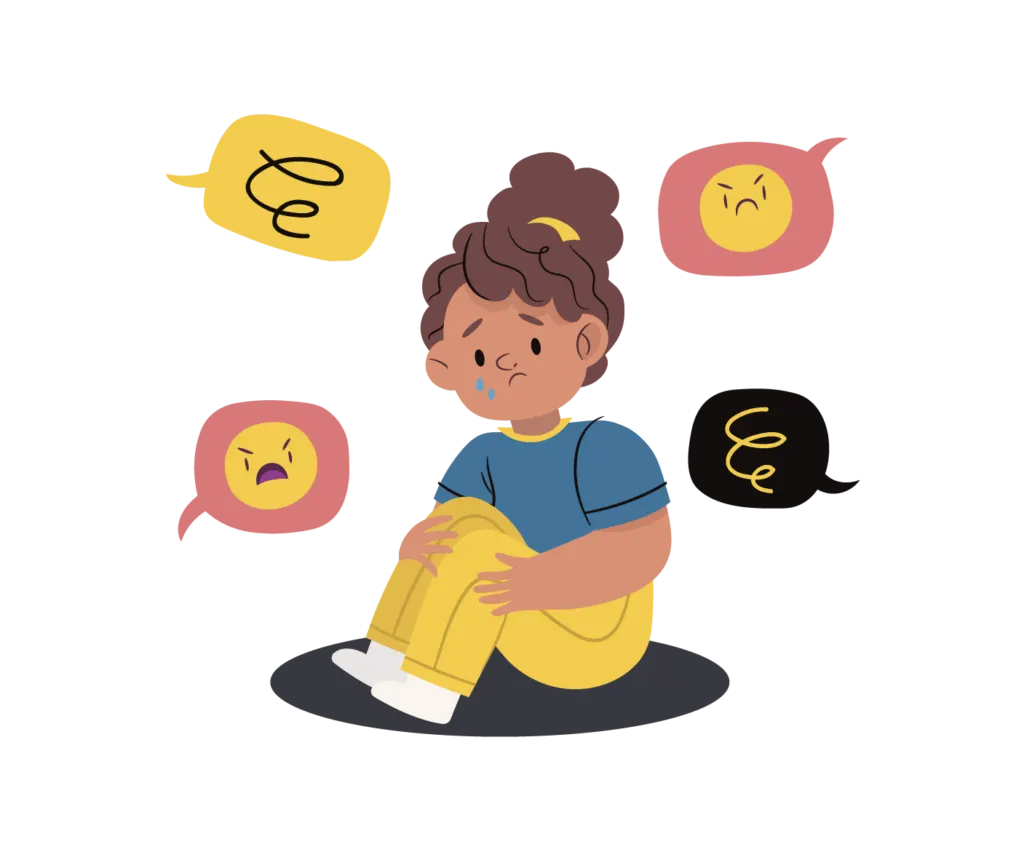
The self-image can contain distortions of identity, such as low self-esteem or chronic self-devaluation. NARM helps to mindfully recognize these dysfunctional beliefs and behavior patterns.
The work takes place on the physical and the psychological level of human existence at the same time. The aim of NARM® is to improve or restore the connection with oneself, with one’s feelings, one’s body and one’s own aliveness.

The five core resources in NARM
Psychotherapy with NARM® is based on five fundamental developmental themes. For us humans, these are core resources and form the basis for contact, support and safety within us, so that we can live our lives in a relaxed and self-determined way. They are essential for our capacity for self-regulation and for our presence in the here and now – toward ourselves and others. They are basic needs.
If hurtful situations occur during a child’s developmental phases, the development of these core resources can be impaired, and adaptive survival strategies develop from this – depending on the resource or core need. This process is called developmental trauma.
It always takes an individual form, but developmental trauma can then show itself, for example, in feeling like a stranger in the world, perhaps like an alien; in not being able to sense or communicate our needs; in feeling wrong at the core and lacking healthy self-confidence; in needing harmony and being unable to set boundaries – or, on the contrary, in having an enormous problem with boundaries set for us from outside.
Seemingly not being made “for relationships” or for “this thing called love”, or having an excessive sexual desire, can also be an effect of developmental trauma or of the unconscious survival strategy. The repression of the old, deep, inner pain plays an enormous role in this strategy.
1. Connection & contact
2. attunement to needs
3. trust
4. autonomy
5. love & sexuality
We feel we belong in the world, are in contact with our body and our emotions, and are able to build healthy and stable connections with others.
We recognize our needs and are able to reach out to others and ask for support. We can enjoy the fullness of life.
We have a basic trust in ourselves and in others. This trust gives us the security to have healthy, mutual relationships and to enter into relationships of interdependence.
We are able to say “no” and set clear boundaries. We express our thoughts openly without being influenced by guilt or fear.
Our heart is open, and we can unite both a loving relationship and a vibrant sexuality.
Origins of the NARM model
The NeuroAffective Relational Model “NARM®” was, as briefly mentioned above, developed by Dr. Laurence Heller, a longtime teacher of “Somatic Experiencing”.
In contrast to “Somatic Experiencing”, where the focus is on shock trauma, “NARM®” primarily addresses developmental, relational and attachment trauma.
Shock trauma refers to rather one-off events that massively overwhelmed the nervous system and could not be processed afterwards.
How does NARM® work?
- NARM® deals with the survival patterns that arose from the loss of connection and unconsciously influence our later lives. These patterns operate on the levels of identity, emotions, body and behavior.
- The work is not regressive; it is resource-oriented and works relationally in the here and now.
- The method combines Somatic Experiencing® with psychodynamic approaches such as attachment theory and object relations theory, broadening the understanding of human identity to a more holistic level.
- In its methodology, NARM® combines working with body, cognition and emotion at the same time, which significantly expands the therapeutic possibilities in treating developmental trauma. It is a so-called “top-down and bottom-up approach”.
- The central focus is on exploring and dissolving limiting identifications with oneself and others, as well as on fostering body awareness (somatic mindfulness) and observing instinctive reactions.


About the developer, Dr. Laurence Heller
As briefly described above, NARM® was developed by Dr. Laurence Heller with the aim of supporting people with developmental trauma. It is based on insights from various therapeutic schools – including attachment theory, psychodynamic approaches, Gestalt work, cognitive therapy and body-oriented methods such as Somatic Experiencing®.
NARM combines psychotherapeutic work with a resource-oriented, present-focused approach in which the therapeutic relationship plays a central role.
The focus is not on going back into past experiences or delving into dysfunctional patterns, but rather on strengthening the inner parts that are already healthy and well organized. The method helps people develop more self-contact and build new inner structures in those areas where self-regulation is impaired – in a way that doesn’t overwhelm the nervous system.
Frequently asked questions about NARM
What is NARM?
NARM is the NeuroAffective Relational Model, a body- and relationship-oriented approach for working with developmental and attachment trauma, developed by Dr. Laurence Heller.
It combines body awareness (somatic mindfulness), feelings and psychodynamic understanding. The work happens in the here and now with the survival strategies that arose from early relational experiences and still shape our self-image and our relationships today.
What does NARM mean by developmental trauma?
Developmental trauma refers to early, often repeated experiences in which a child’s basic needs for contact, attunement, trust, autonomy or love were not sufficiently met.
Unlike shock trauma, it is rarely about a single event, but about a relational climate. What matters is how a child processed what happened on the inside – which is why the same situation can leave very different traces in two people. More on this in the article Healing developmental trauma.
Which five survival styles does NARM describe?
NARM describes five survival styles, named after the five core needs: contact, attunement, trust, autonomy, and love and sexuality.
- Contact: withdrawing into thinking, the feeling of not really belonging.
- Attunement: hardly sensing your own needs and mainly taking care of others.
- Trust: wanting to stay in control and preferring to rely only on yourself.
- Autonomy: finding it hard to say no, adapting and inwardly pushing back.
- Love and sexuality: experiencing heart and sexuality as separate, regulating a lot through performance and perfection.
Most people recognize themselves in several styles. They are not diagnoses, but adaptations that were once wise. More detail in the article Understanding NARM survival strategies.
How does NARM differ from Somatic Experiencing and other methods?
NARM focuses primarily on developmental and attachment trauma, Somatic Experiencing® primarily on shock trauma. Laurence Heller taught Somatic Experiencing® for a long time and developed NARM further from it.
Unlike purely talk-based methods, NARM includes the body (top-down and bottom-up). Unlike regressive approaches, it doesn’t lead back into childhood, but stays with what is happening within you today. And instead of offering interpretations, things are explored together.
Does NARM work with the past or with the present?
With the present. NARM is not regressive: a person’s history is honored, but the subject of the work is how early adaptations continue to have an effect today – in the body, in feelings and in contact with others.
Memories may come up when they become important on their own. But they don’t have to be relived.
Who is NARM suitable for – and who is it not suitable for?
NARM is suitable for adults who recognize recurring patterns in relationships, in their self-worth or in dealing with feelings, and who have basic psychological stability.
As the sole form of support, NARM is not suitable in acute crises, acute suicidality, psychoses or active addictions. In that case, the first step is to see a doctor, a medical specialist or a licensed psychotherapist. In acute crises you can reach the German telephone counseling service TelefonSeelsorge around the clock at 0800 111 0 111, and in an emergency the emergency number 112.
Is NARM scientifically proven?
Only in part. NARM draws on well-researched neighboring fields such as attachment research, the ACE studies on adverse childhood experiences, and interpersonal neurobiology.
On the specific effectiveness of NARM, there have so far mainly been qualitative studies and small studies, but no large randomized controlled trials. What this means and which criticism is justified is something I describe in the article NARM criticism.
Is NARM covered by health insurance?
Usually not. In Germany, NARM is not one of the approved methods (Richtlinienverfahren) of the statutory health insurance funds; support from a Heilpraktiker for Psychotherapy is a private service.
Private health insurance or supplementary insurance may partially reimburse costs, depending on the plan. It’s best to check with your insurance provider in advance.
Where can I experience NARM with Simon Karim?
In my practice in Berlin, in Eberswalde and online via video. I am a certified NARM® therapist and Heilpraktiker for Psychotherapy (licensed non-medical psychotherapist in Germany).
You can find everything about the practice, the process and appointments on the pages NARM therapy in Berlin, NARM therapy in Eberswalde and NARM therapy online. A NARM session lasts 50 minutes. The first step is a free introductory call (15 minutes, via Zoom or phone).
Experience NARM therapy – online from anywhere, in Berlin or Eberswalde
If you want to not only understand NARM but experience it yourself, I’ll gladly accompany you. Together we explore what is still standing in the way of what you actually wish for. Perhaps that is inner peace, more lightness and aliveness, or the feeling of coming back into your strength – instead of experiencing stress, fears, anger, sadness, rumination, self-doubt or recurring relationship problems.
How I work as a NARM therapist, where my practice is and how the first session goes – you can read about all this on the page NARM therapy in Berlin. I also accompany you in my practice in Eberswalde and online via video.
If early imprints show up in you mainly as a harsh inner critic, in self-doubt or in constantly trying to please others, you’ll find support with exactly this focus under Support with self-doubt, also based on NARM®. NARM is well suited for this because self-doubt is often rooted in early relational experiences – which is exactly where the work with your survival strategies begins. I describe what a session feels like from the inside in the article What does NARM feel like?
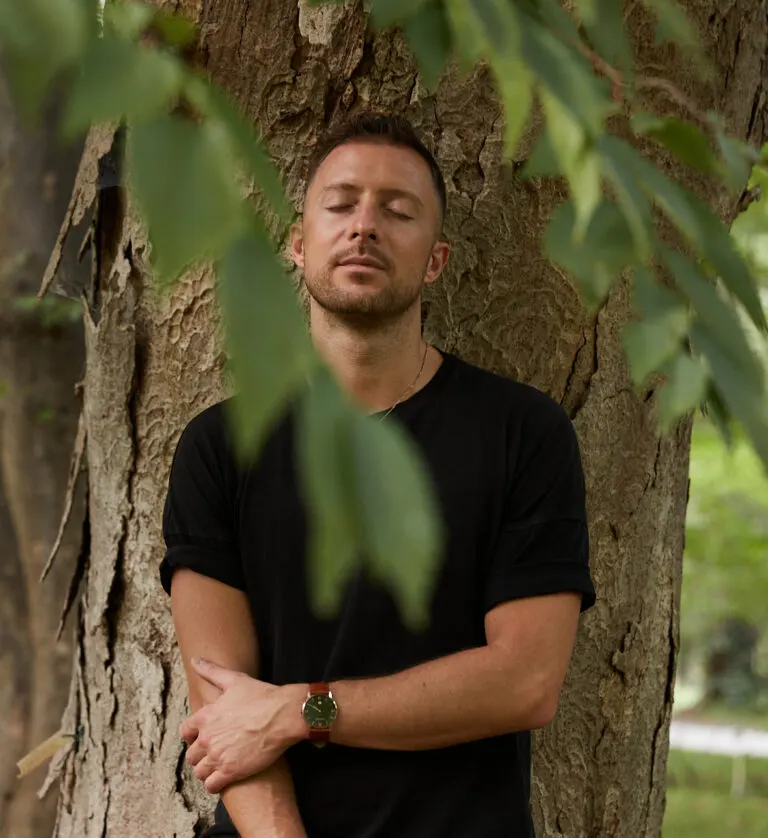
2024 NARM Therapist
2021 NARM-informed Professional
2021 Heilpraktiker for Psychotherapy
You can find more about me, my training and qualifications here.
In a free introductory call, you can learn more about NARM and how personal support could work for you.
for those interested
Learning NARM: training and institutes
- NARM Training InstituteThe institute of Dr. Laurence Heller
- NARM trainings and datesCurrent trainings of the NARM Training Institute
- Complex Trauma Training Center (CTTC)NARM therapist trainings for professionals